
Naxos in Greece is one of the Cyclades’ most understated islands. It’s at the center of myth and modernity, but even experienced tourists often miss it in favor of its flashier neighbors. Yet this quiet giant boasts more than sun-soaked beaches and traditional villages: its geography and centuries-old traditions have created microclimates, flavors, and experiences you won’t find on any postcard.
In contrast to the more crowded islands, Naxos’s pristine waters run miles along Agios Prokopios Beach. Beyond the famous beaches are small coves that can only be reached by boat tours of Naxos or a speedboat; each secret cove is unique. These remote beaches are more than just “quieter”; the slight variations in wind and current have molded coastal caverns and unusual marine habitats that are only now being cataloged by adventurers.
However, Naxos’s charm extends beyond its beach. Travel inland to explore the historic villages of Naxos, where the authentic Greek way of life is revealed, where Greeks come together for summer celebrations, grandmothers share recipes salted by the Aegean, and old stone towers serve as the archeological sites of Naxos.
In this article, we’ll peel back the layers of Naxos’s untold stories, from the Temple of Demeter’s views to the island’s lesser-known summer festivals. Prepare to challenge the assumption that all Greek islands are interchangeable beach destinations—instead, you’ll see why Naxos in Greece stands apart as the ultimate secret for your next summer vacation.
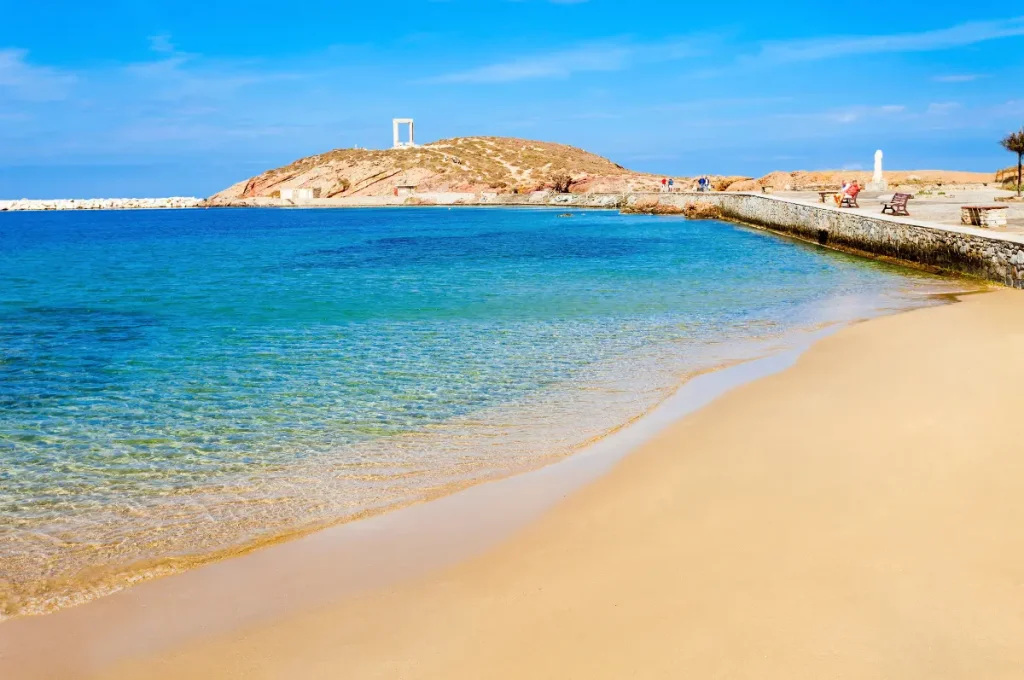
Beaches & Crystal Waters
Naxos in Greece is more than just another island with golden sand; it’s an entity where geology, wind, and waves have worked together for thousands of years to create hidden beaches and unusually clean waters.
Agios Prokopios & Plaka: The Gold Standards
While Agios Prokopios Beach may appear on every Cyclades postcard, few appreciate how its unique undersea topography creates that signature glass-like calm at dawn. The gentle slope of the seabed and sheltered orientation result in a microclimate where morning winds are virtually nonexistent—ideal for paddleboarding and swimming.
Just a short walk south lies Plaka, a sweeping stretch of fine, golden sand that seems infinite. The constant trade winds sculpt towering dunes on one side and push salt-kissed breezes inland, keeping the shoreline pleasantly cool even on the hottest afternoons. Agios Prokopios and Plaka form a dynamic duo!
Hidden Coves Accessible Only by Boat
Beyond the well-trodden sands, boat tours of Naxos reveal unique coves reachable only from the water. These hidden places—called true secluded beaches—are cut into rugged limestone cliffs and draped in pine shadows. Because they’re accessible primarily by boat or private RIB charters, foot traffic is minimal, and the coves feel like personal sanctuaries.
Some of the most enchanting spots include:
-
Kedros Cove: A crescent of pale stones ringed by cinnamon-hued rocks, where undercurrents feed rare starfish.
-
Glyfada Secret Bay: Shallow, jade-green waters warmed by a natural thermal spring fissure.
-
Gorilla Beach: Named for its cliff-side rock formation, this cove offers one of the island’s only natural tide pools.
On these private excursions, you might witness local fishermen’s nets being hauled in at dawn, or catch a glimpse of migrating sea turtles that use these quiet inlets as safe havens.
To experience these hidden beaches, choose a half-day or full-day cruise and pack smart with eco-friendly sunscreen, reef-safe goggles, and a reusable water bottle because many secluded spots lack facilities. Embrace the luxury of space and solitude on Naxos’s secret shores. In a world of crowded resorts, these beaches and crystal-clear waters offer a rare chance to connect with nature—and yourself—far from the crowd and noise.
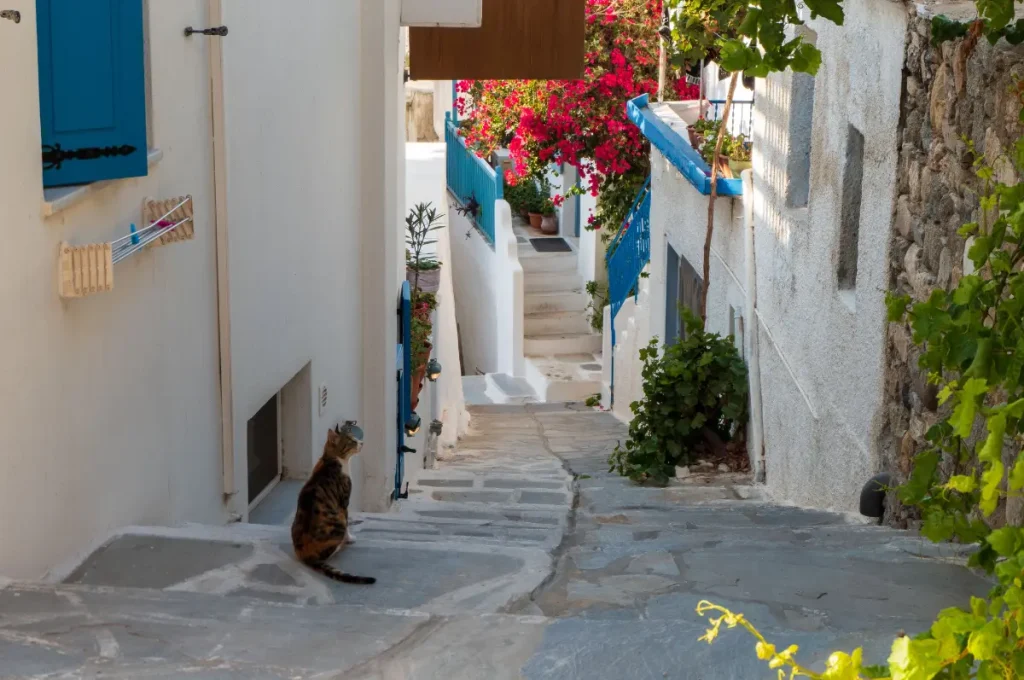
Charming Cycladic Villages
High-rise resorts and busy beach clubs may dominate postcards of the Cyclades. Still, true insiders know that the island’s heart lies in its traditional villages—places where the Greek island lifestyle still unfolds at a human pace. These places offer an authentic window into local artistry, culinary heritage, and centuries-old customs that most visitors never encounter.
Halki: Citrus, Coffee & Community
Nestled in a lush valley just 15 minutes from Naxos Town, Halki retains the warmth of a village where everyone still greets you by name. Its claim to fame is the Citrus Distillery of Naxos, one of the island’s oldest operating businesses (est. 1862). Here, sun-kissed oranges and lemons are hand-picked by local farmers, distilled in copper stills, and transformed into kitron—Naxos’s signature citrus liqueur.
But the true magic of Halki lies beyond the tasting room. Wander its narrow lanes, where grandmothers sit outside white-washed houses, shelling peas or baking bread in wood-fired ovens. Make a stop at the village kafeneion (coffee house), a shaded square where men sip Greek coffee and debate everything from olive oil yields to the best tabs at the local taverna. Time doesn’t rush here.
Kitron made in Halki has a richer aroma than other Greek liqueurs because small batches allow individual harvests to dictate each distillation cycle—an artisanal touch you won’t find in mass-produced spirits.
Filoti: Amphitheater by the Mountain
Perched on the northern slopes of Mount Zas, Filoti unfolds like a living amphitheater. Whitewashed homes cascade downhill, framing Gefyra Square, where centuries-old plane trees dapple the cobblestones with shade. The village’s signature church, Panagia Filotitissa, boasts a soaring bell tower whose chimes echo across the valley every hour.
Yet, Filoti’s lesser-known treasure is its local artisan community. Step inside a corner workshop to watch weavers press cloth in wooden looms, or sample freshly made graviera cheese at a family-run dairy. In Filoti, each craft is a thread linking Naxos’s Mycenaean roots to modern life—a testament to how tradition can thrive in daily routines.
Unlike many Cycladic settlements that have pivoted entirely to tourism, Filoti balances visitor interest with genuine craftsmanship—meaning your euro goes directly into sustaining local livelihoods, not into faceless conglomerates.
Apeiranthos: The Marble Village
If Halki is the soul and Filoti the stage, Apeiranthos is the island’s museum. Known as “the Marble Village,” Apeiranthos is built from the very stone its quarries once yielded. Walking its narrow, marble-paved alleys, you’ll discover a cluster of specialized museums—Archaeological, Geological, Folklore, and Visual Arts—each housed in restored mansions. These institutions aren’t dusty time capsules; they pulse with community pride, hosting rotating exhibits curated by local scholars.
Apeiranthos also boasts the Zevgolis Tower, a 17th-century fortress that once guarded villagers from pirate raids. Climbers who ascend its steep interior spiral will be rewarded with panoramic views of verdant gorges and the shimmering gulf beyond—a perspective few tourists ever see.
Apeiranthos’s cultural density rivals that of much larger Greek cities—yet its visitor numbers remain low because most tour operators skip it in favor of easier stops. This makes Apeiranthos the perfect refuge for travelers craving intellectual and sensory immersion without crowds.
Visiting these Cycladic villages isn’t just a meeting with the past; it’s an invitation to partake in a living cultural continuum. By exploring Halki’s citrus rituals, Filoti’s communal rhythms, and Apeiranthos’s marble‐carved narratives, you become part of each place’s ongoing story, far beyond the fleeting snapshots of a typical island tour. And when every road seems to lead toward a postcard moment, these hidden villages remind us that real discovery happens when we follow the quieter paths.
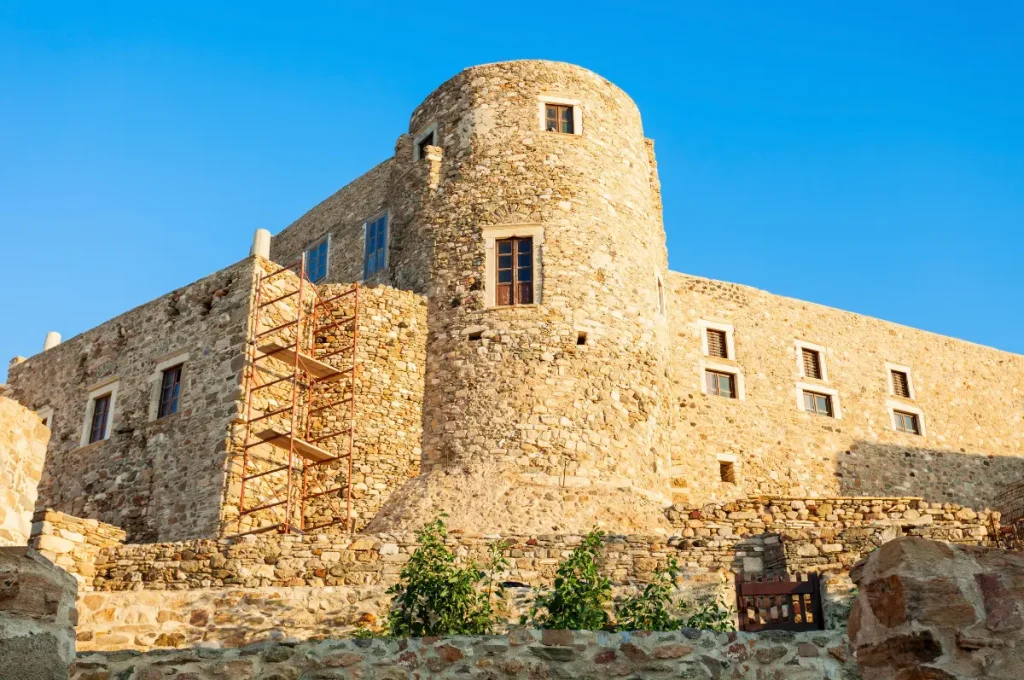
Hidden History & Living Archaeology
Naxos has an extraordinary archaeological tapestry, where ancient ruins are not static relics but active, breathing elements of island life. History is woven into daily rhythms, from morning prayers at marble temples to farmers noting seasonal shifts in millennia-old olive groves.
Sunrise at the Portara
Most visitors snap a quick photo of the Portara Naxos—the majestic marble gateway to the Temple of Apollo—and move on. But dawn here is sacred. Long before Instagram existed, Naxians ascended the islet of Palatia to honor Apollo’s light at the first sun. Today, a handful of early risers follow suit: yoga mats unfurled atop the platform perform slow salutations as the Aegean horizon ignites. This living ritual connects modern seekers with an unbroken chain of devotion stretching back to 522 BCE.
The original temple’s architects left subtle “river channels” carved into the foundation to direct rainwater—and sacred libations—down to the sea, symbolically linking gods and mortals.
The Temple of Demeter: From Harvest to High-Tech Research
Tucked in the foothills near Sangri, the Temple of Demeter celebrates the island’s agricultural roots. Beyond its Doric columns and carved friezes, today’s visitors might stumble upon archaeologists using drones and ground-penetrating radar to map hidden substructures, revealing an entire complex of storage rooms and sacrificial altars. These modern tools have uncovered grains of barley carbon-dated to 1500 BCE, offering a window into ancient cereal cultivation and Feasts of Demeter that likely drew pilgrims from across the Cyclades.
While Santorini’s Akrotiri often grabs headlines for Bronze Age discoveries, Naxos’s agrarian temples offer richer, continuous records of how early Greeks adapted crops to changing climates—data now guiding contemporary sustainable farming on the island.
Castro Fortress & the Palatial Quarry Network
Perched above Chora, the Castro fortress once guarded Venetian lords against Ottoman incursions. Far from a stagnant monument, its ramparts now host small-scale excavations that trace the evolution of fortification techniques—stacked cyclopean walls progressively giving way to reinforced bastions as gunpowder appeared. Below Castro lies a network of ancient marble quarries: hidden tunnels where artisans extracted sculpting blocks destined for the Parthenon and Portara.
Ask your guide to show you a “tool-signature” mark on a quarry wall—these etched symbols identified the workshop responsible for each block, akin to a GPS tag in antiquity.
Through these archaeological encounters, Naxos transforms from a postcard paradise into a living classroom. Whether framed by sunrise yoga at the Portara, drone scans at Demeter’s temple, or tool marks in its quarries, each site invites you to witness the island’s ongoing dialogue between past and present.
Authentic Culinary & Cultural Immersion
For many, Greek cuisine conjures images of feta salads and moussaka—but on Naxos, every bite tells a story centuries in the making. This island isn’t merely a backdrop for your meal; it’s the source of your ingredients, techniques, and dining rituals. Here, Aegean cuisine coexists with Cycladic folklore in ways few experts acknowledge.
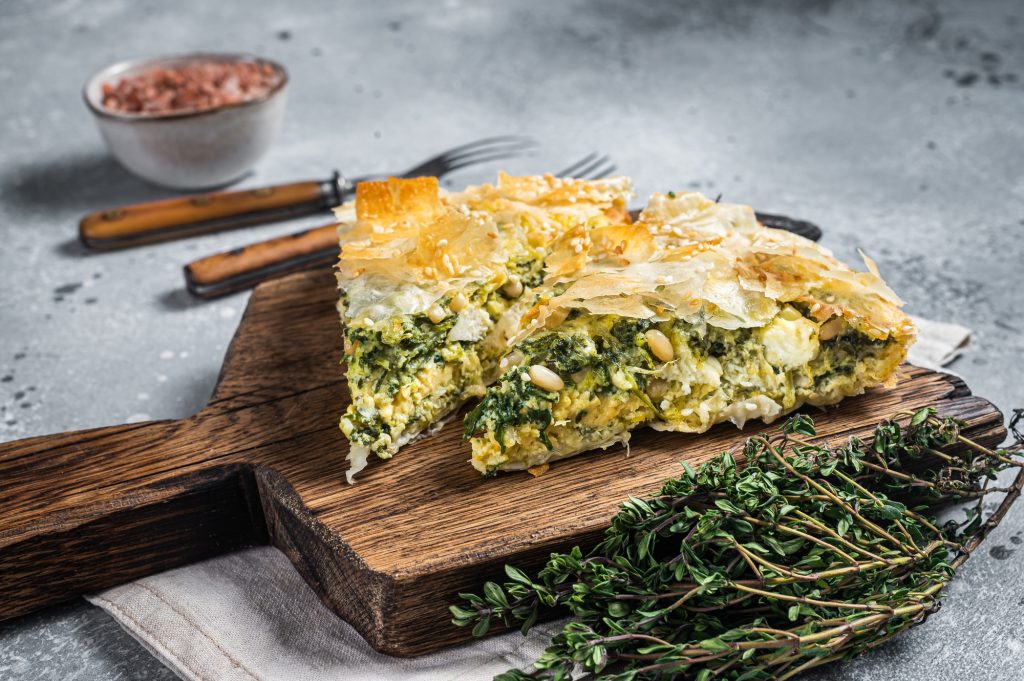
Our Naxos cooking lessons aren’t staged “Instagram experiences” but genuine transfers of ancestral knowledge. Picture a sunlit courtyard at Damalas where you harvest arugula and wild oregano from terraced gardens before learning to knead dough for pita Riganata—a local flatbread studded with regional herbs. The flour comes from stone-ground barley, an heirloom variety predating classical Greece. In these classes, students discover that each herb’s oil content varies by altitude and season, and that mastering the local “dry-fry” technique for fish elevates simplicity into revelation.
The “wild greens” dishes you taste are often foraged by the same families who’ve stewarded communal grazing lands since Byzantine times, making every salad a link in a living ecosystem.
Citrus Distillery: Where Flavor Meets Alchemy
At Halki’s Citrus Distillery of Naxos, kitron isn’t just a drink—it’s a ritual. Unlike mass-market liqueurs, the peels are macerated for weeks in copper vats before a double-distillation purifies the essence. The result is not mere “orange liqueur” but a spectrum of bitters, floral notes, and citrus wax—an olfactory map of this microclimate valley. Visitors who stay past the tasting discover the distillery’s hidden annex, where local chefs refine citrus-infused olive oils, preserving summer’s zest in small batches for fall’s hearty stews.
Kitron’s three flavor profiles—green (bitter), yellow (aromatic), and common (balanced)—mirror Naxos’s own three cultural layers: ancient Dorian, Byzantine, and modern Cycladic.
Pottery as Living Memory
In Damalas Village, Manolis Lybertas’s Pottery Workshop offers more than wheel-throwing lessons—a dialogue with pre-Hellenic clay traditions. Students begin by harvesting local kaolin clay from cliffside outcrops—a practice that connects them to the island’s primordial foundations. Under Manolis’s guidance, they sculpt replicas of sfouni wine jugs and tyromethira cheese strainers, both forms unchanged since the Mycenaean era. Once fired in wood-fired kilns at 950°C, these vessels carry micro-traces of olive smoke and volcanic minerals, making each piece an edible heirloom.
Unlike commercial ceramics, this clay’s porosity offers natural breathability for storage, preserving wine and cheese with centuries-tested micro-fermentation benefits.
By engaging in these culinary and cultural experiences, you do more than “taste” Naxos—you become part of its ongoing heritage. From foraging ancient grains to sipping multi-layered citron and shaping living earth into vessels, you’ll find that food and craft here are inseparable from identity, memory, and the island’s future.
Insider Tips for a Perfect Naxos Summer
Even seasoned Greece travelers often miss the subtle details that make Naxos shine in summer—those hidden advantages and local rhythms that elevate a good vacation into a flawless one. Below are insider strategies grounded in microclimates, community rituals, and under-the-radar experiences.
Time Your Visit Around Local Microclimates
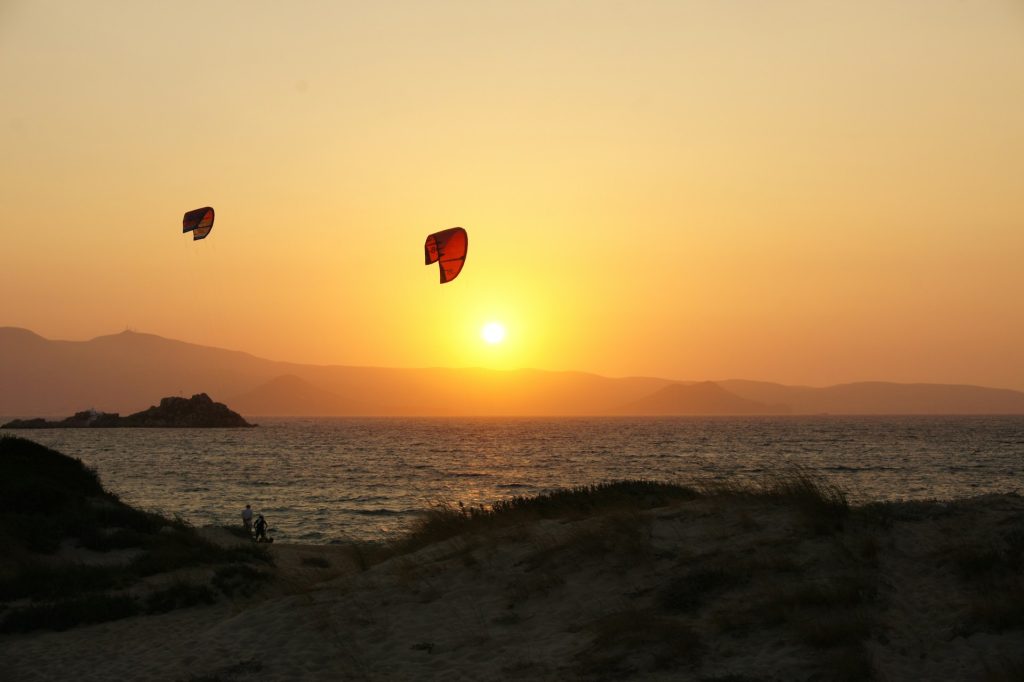
While July and August draw the crowds, Naxos’s varied topography means you can chase shade or breeze simply by shifting 10 km inland. Mount Zas’ foothills—home to Filoti—stay 3–4 °C cooler than the coast, offering prime hiking and village exploration before the midday heat. Conversely, the southern beaches near Mikri Vigla benefit from afternoon meltemi winds, which are perfect for windsurfing and kitesurfing well into September.
Pack a lightweight merino wrap—ideal for chilly dawn yoga at Agios Prokopios, yet breathable through midday’s 30 °C highs.
Savor Sunrise & Sunset “Happy Hours”
The classic Naxos sunset at the Portara draws crowds, but few know that the Temple of Demeter offers a quieter evening spectacle. Arrive 45 minutes before golden hour, claim the western terrace, and watch how the sunlight softens the marble into rose and ochre—then linger for an afterglow few visitors see. For sunrise, kayak off Kedros Cove and watch the sun break over the Aegean, a moment reserved for Naxos Deep Blue’s private boat tours.
Local cafés in Naxos Town open as early as 6 AM; order a Greek frappé with a side of loukoumades (honey-soaked doughnuts) for a sweet morning treat.
Participate in Micro-Festivals & Village Gatherings
Beyond the major Apiranthos Music Festival, every village hosts its mid-summer “panigiri”—from Halki’s olive oil blessing ceremonies to Damalas’s pottery blessing (where new vessels are sprinkled with holy water). These off-season festivals run from June through August, including impromptu dancing, goat-souvlaki feasts, and midnight fireworks over the bay.
Ask a taverna owner for the “hidden panigiri schedule”—they’ll tip you off to the tiniest gatherings, where you’ll dine with fishermen, cheese-makers, and their families.
Conclusion & Next Steps
Naxos in Greece is a summer destination that honors its past and embraces modern comfort. From the beaches of Agios Prokopios and secret coves reachable only by boat, to the living folklore of Halki’s citrus distillery and Damalas’s ancestral pottery workshop, the island rewards those who look beyond the usual image. Its hidden history—sunrise rituals at the Portara, drone-led digs at the Temple of Demeter, and tool-marked marble quarries—reveals a continuum of civilization that few destinations can match.
The authentic Cycladic villages—Halki, Filoti, Apeiranthos—offer a glimpse of communal life still guided by centuries-old traditions. Meanwhile, Naxos’s island-hopping through half-day and full-day Cyclades cruises invites you to enjoy the Aegean waves.
Finally, the true “secret” of Naxos in Greece lies in its micro-climates and village festivals—from dawn yoga on mirrored seas to moonlit panigiri in hidden squares—offering layers of discovery that evolve with the sun and the seasons. Whether you chase the pink glow of sunrise at an ancient temple, savor the bittersweet tang of artisan kitron, or trace marble veins back to Mycenaean quarries, you’re participating in Naxos’s ongoing story.
Ready to unlock Greece’s best-kept secret?
Check out the Official Greek National Tourism Organization’s Naxos Guide for ferry schedules, accommodation options, and seasonal events.
